Market Overview
Korean equities weakened sharply in the latest market snapshot, with the KOSPI at 7,551.25, down 2.32%, and the KOSDAQ at 936.40, down 1.60%. The session was broadly risk-off, with headlines pointing to early index pressure, semiconductor selling, and caution around external market risks. Despite the weak backdrop, several high-volume small-cap names posted double-digit gains, making stock-specific catalysts more visible than the overall index direction.
Key Themes
- Broad market pressure: Market headlines described the KOSPI trading around the 7,500 line in early trading, while the KOSDAQ also moved lower. Separate reports highlighted a drop in KOSPI trading volume from roughly 1.1 billion shares to around the 500 million-share range this month, suggesting thinner participation in the market.
- Semiconductor and technology divergence: Samsung Electronics fell with the broader KOSPI and amid semiconductor-related headline pressure, but smaller technology-related names such as Imagis and Raicom advanced sharply on company-specific contract and sector momentum news.
- Contract-driven rallies: Several of the day's strongest movers were linked to supply contracts, including Imagis, UDMTEK, and Raicom. These stories helped individual stocks outperform even as the market tone remained defensive.
Stocks in Focus
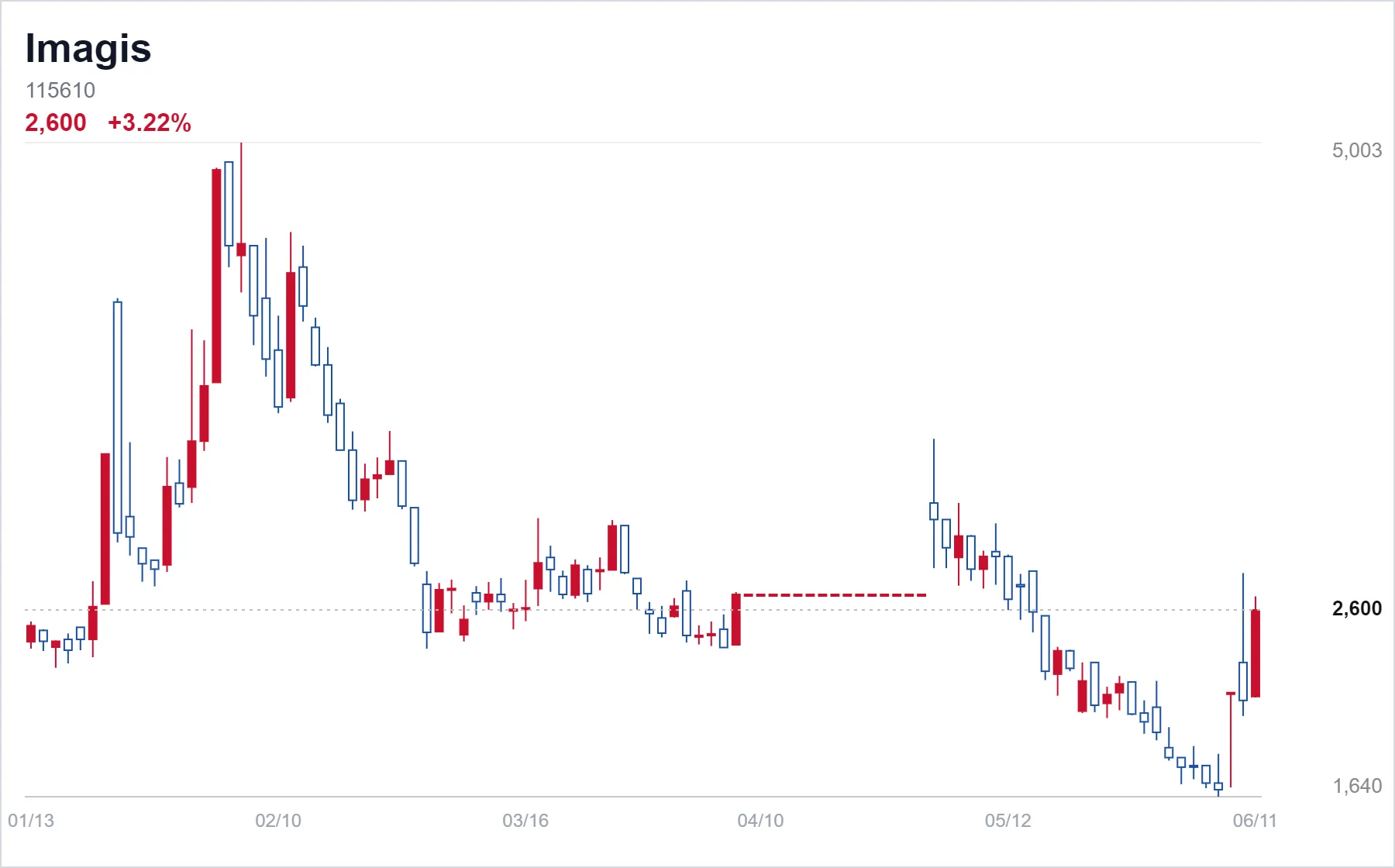
Imagis (115610)
Imagis was the strongest high-volume mover in the selected list, rising 21.08% despite the sharply weaker market. The move was supported by a cluster of headlines around supply contracts and system semiconductor momentum. One reference article noted that Imagis, despite a three-year deficit streak, had signed a supply contract tied to 44% of last year's revenue (The Elec). Another reported a vehicle semiconductor supply contract worth about KRW 5.78 billion and framed it as a possible driver of overseas sales expansion (Top Star News). A separate market article grouped Imagis with other semiconductor-related movers in a rally linked to system semiconductor interest (Pinpoint News).
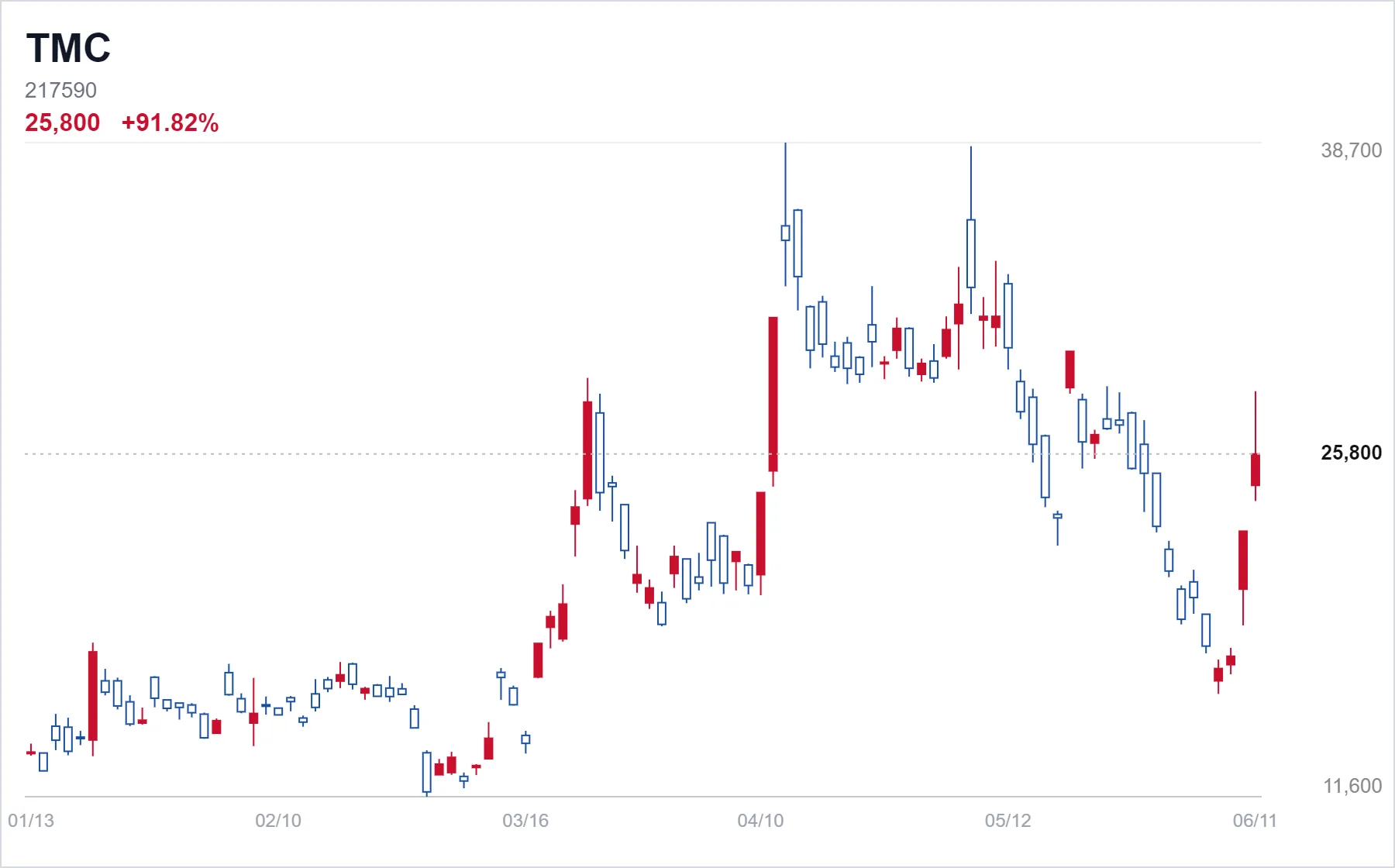
TMC (217590)
TMC jumped 14.60% on volume, making it one of the day's most notable small-cap rallies. The stock drew attention from reports asking why investors were moving into the name (Ggilbo). A more specific catalyst came from a feature article that linked TMC to rising orders related to U.S. data centers and optical communications, with the headline noting factories operating at full capacity (EToday). Another report said TMC closed on June 10 at KRW 22,600, up 29.73%, underscoring recent momentum ahead of today's continued report-worthy move (Top Star News).
Unichem (011330)
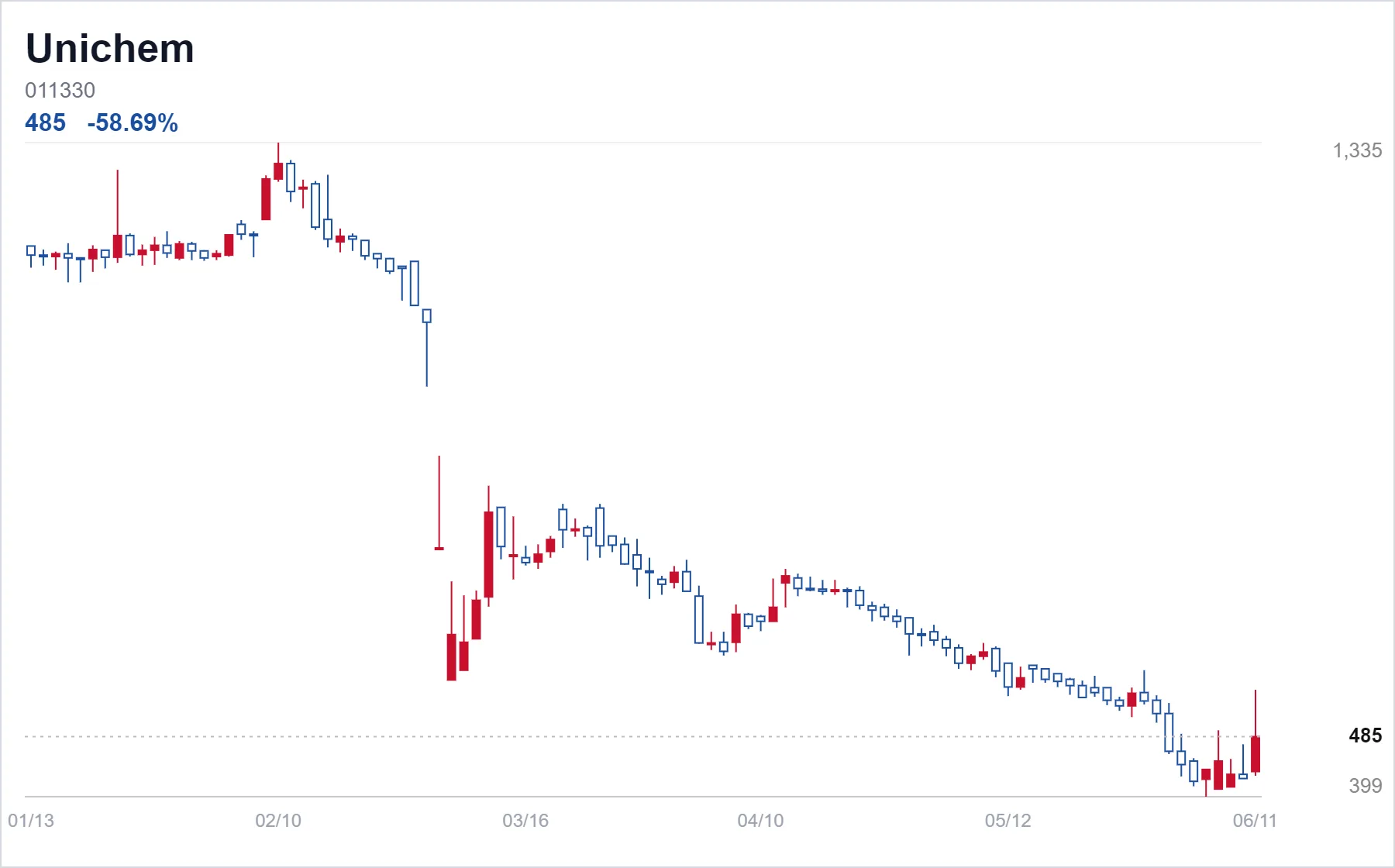
Unichem gained 14.12% on heavy trading, standing out as a clear upside outlier in a broadly defensive session. The reference headlines pointed to expectations around the resumption of normal trading after a trading suspension tied to a stock consolidation (Top Star News). Additional market and corporate disclosure references placed Unichem among names watched in the day's KOSPI and KOSDAQ activity and in June 10 company filings (Public25, Seoul Economic Daily). Based on the supplied data, the stock's move was notable mainly for its size and trading activity rather than for a broad market tailwind.
UDMTEK (389680)
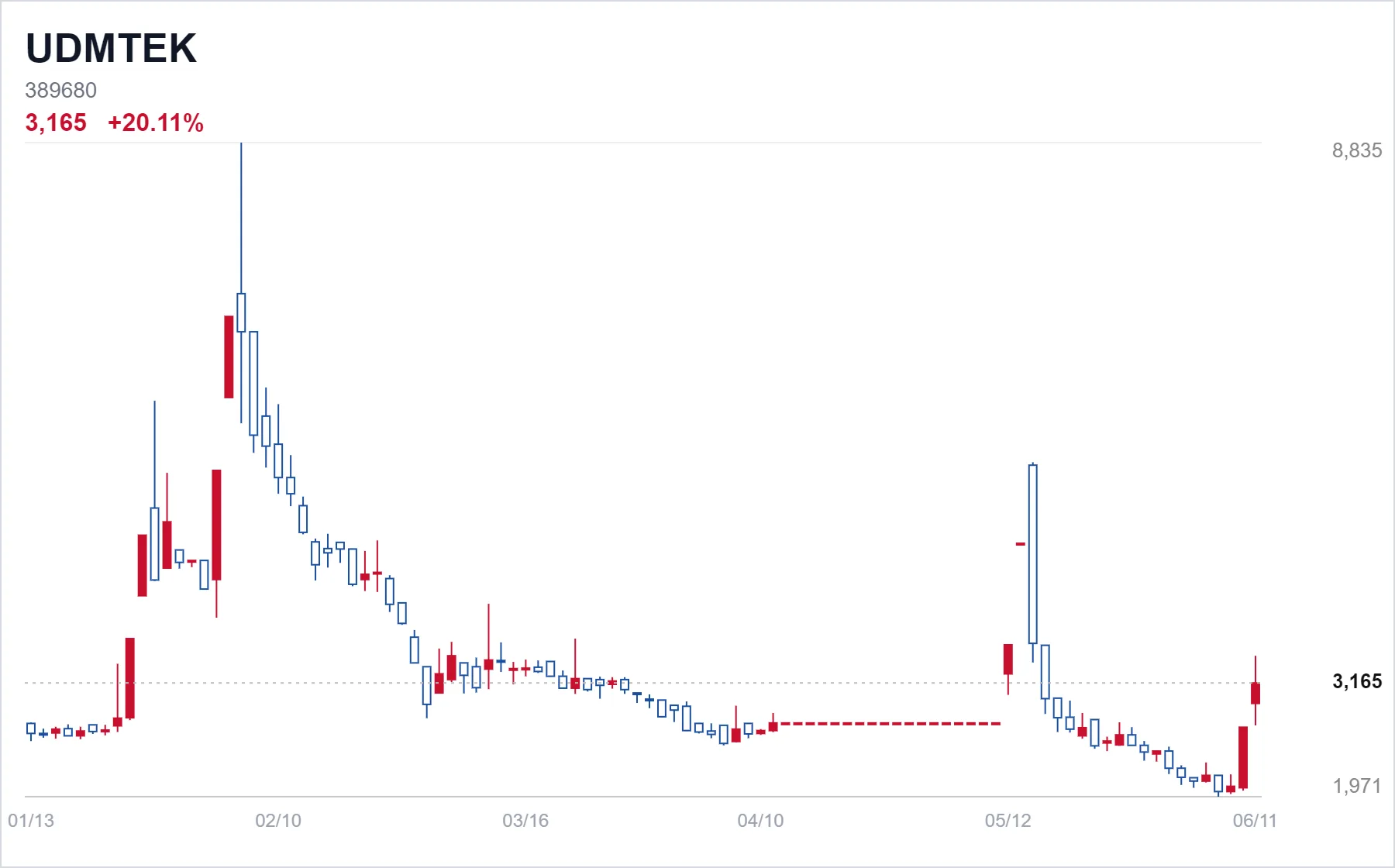
UDMTEK rose 13.89% with volume support, placing it among the day's leading momentum names. The key catalyst in the provided references was a supply contract: Newsis reported a KRW 1.0 billion integrated filter and platform supply agreement (Newsis), while Money Today also highlighted the same KRW 1.0 billion contract (Money Today). A third reference described the deal as a KRW 1.02 billion smart air-care supply contract and linked it to the company's domestic revenue base (Top Star News). The stock's strength was therefore closely tied to contract visibility rather than the overall market direction.
Raicom (388790)
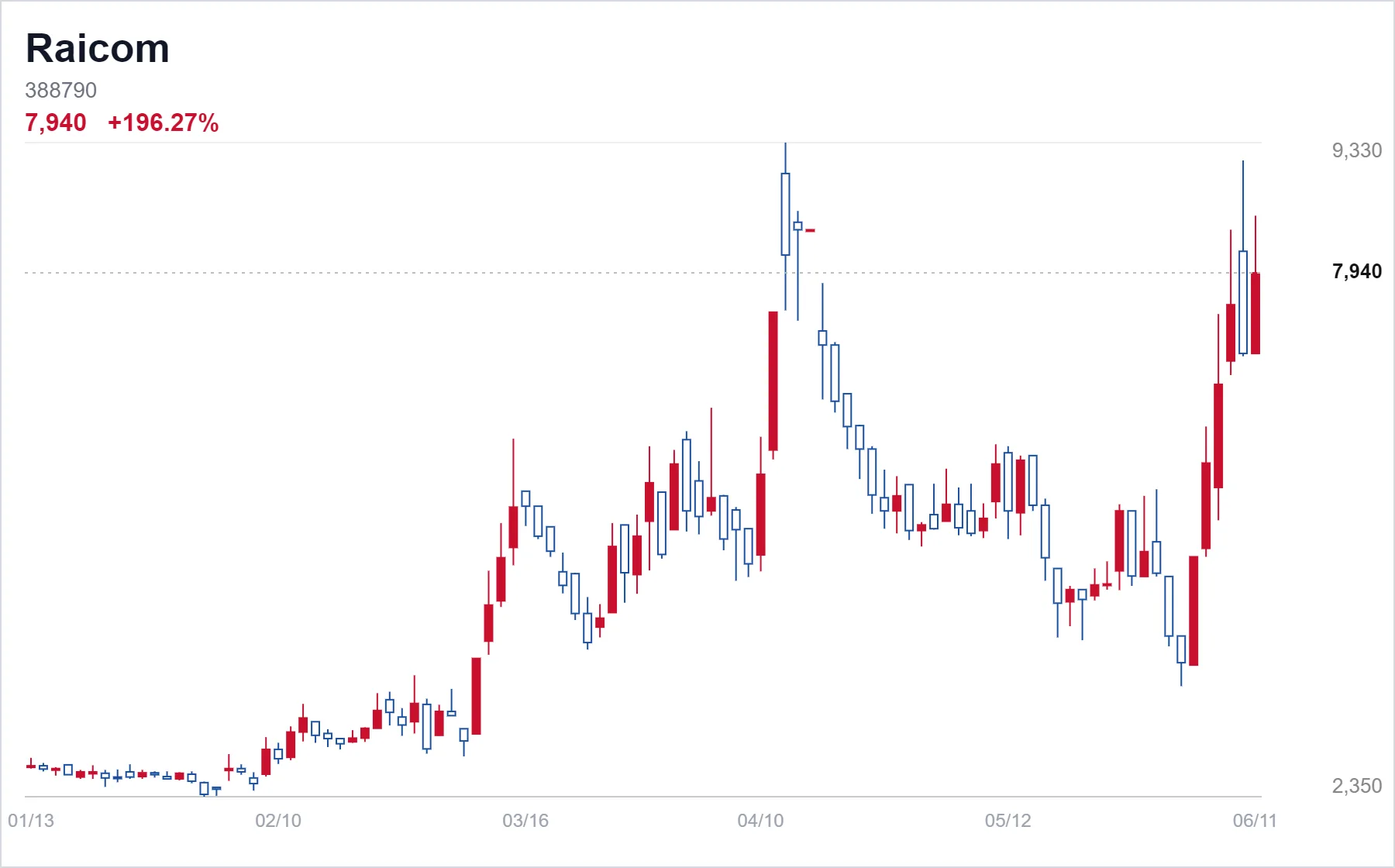
Raicom advanced 12.15% on high volume, drawing attention as another strong technology-related mover. The provided references centered on optical amplifier supply news. EDaily reported that Raicom signed a KRW 2.1 billion contract with Onefinity for DCI optical amplifiers (EDaily). CBCI described the same development as a KRW 2.07 billion optical amplifier supply contract (CBCI). Another article noted intraday strength on June 10, with Raicom trading at KRW 7,980, up 5% at that point (Top Star News). In a session dominated by index weakness, Raicom's move showed continued interest in contract-backed technology names.
Samsung Electronics (005930)
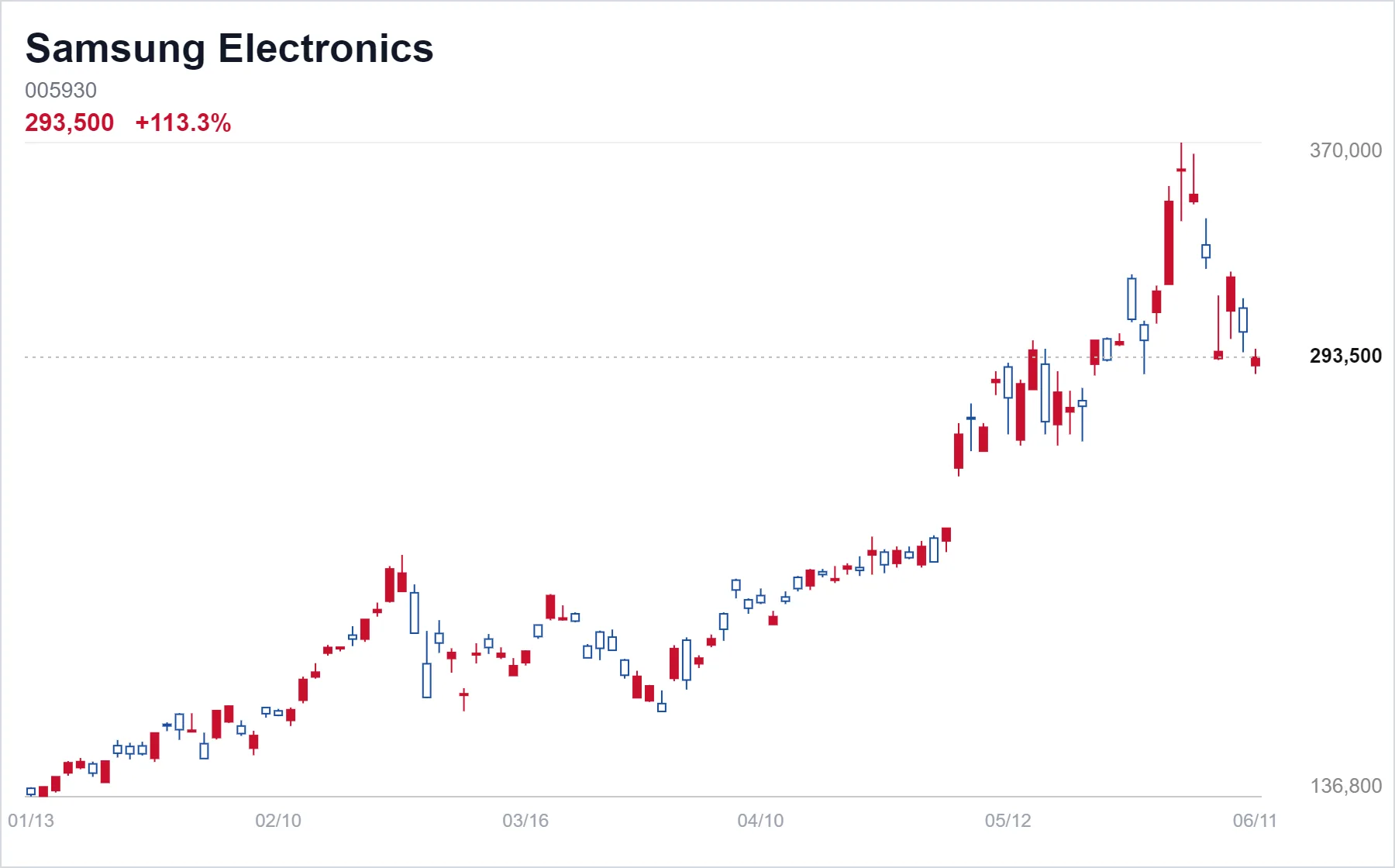
Samsung Electronics fell 2.81%, making it a key market-leading stock to watch as the broader KOSPI sold off. The supplied headlines pointed to mixed company-specific news. One report said Samsung Electronics would allow the use of ChatGPT, Gemini, and Claude from June 12 as part of a broader AX push (News1). However, other references highlighted pressure from minority shareholders seeking access to the shareholder register following controversy around performance bonuses (Yonhap, Chosun Biz). The stock's decline also fit the broader market reports describing semiconductor selling and heavy pressure on the KOSPI.
Market Headlines
- Reports said the KOSPI fell sharply in early trading and fluctuated around the 7,500 line, while the KOSDAQ also declined.
- Market coverage highlighted a drop in KOSPI trading volume from roughly 1.1 billion shares to around the 500 million-share range this month.
- Several headlines focused on semiconductor selling and broader risk-off pressure, including reports that the KOSPI briefly lost the 7,500 level.
- Other reports discussed two straight days of weakness in both the KOSPI and KOSDAQ, citing U.S. market concerns and B2-related worries among the factors weighing on investor sentiment.
- A separate market item said companies that made value-up disclosures outperformed in both share prices and profitability.
Closing Note
The session was defined by broad index weakness, but the stock list showed that company-specific supply contracts and small-cap technology momentum still produced sharp upside moves. The market tone remained cautious, and today's moves are best read as descriptive market commentary rather than investment guidance.